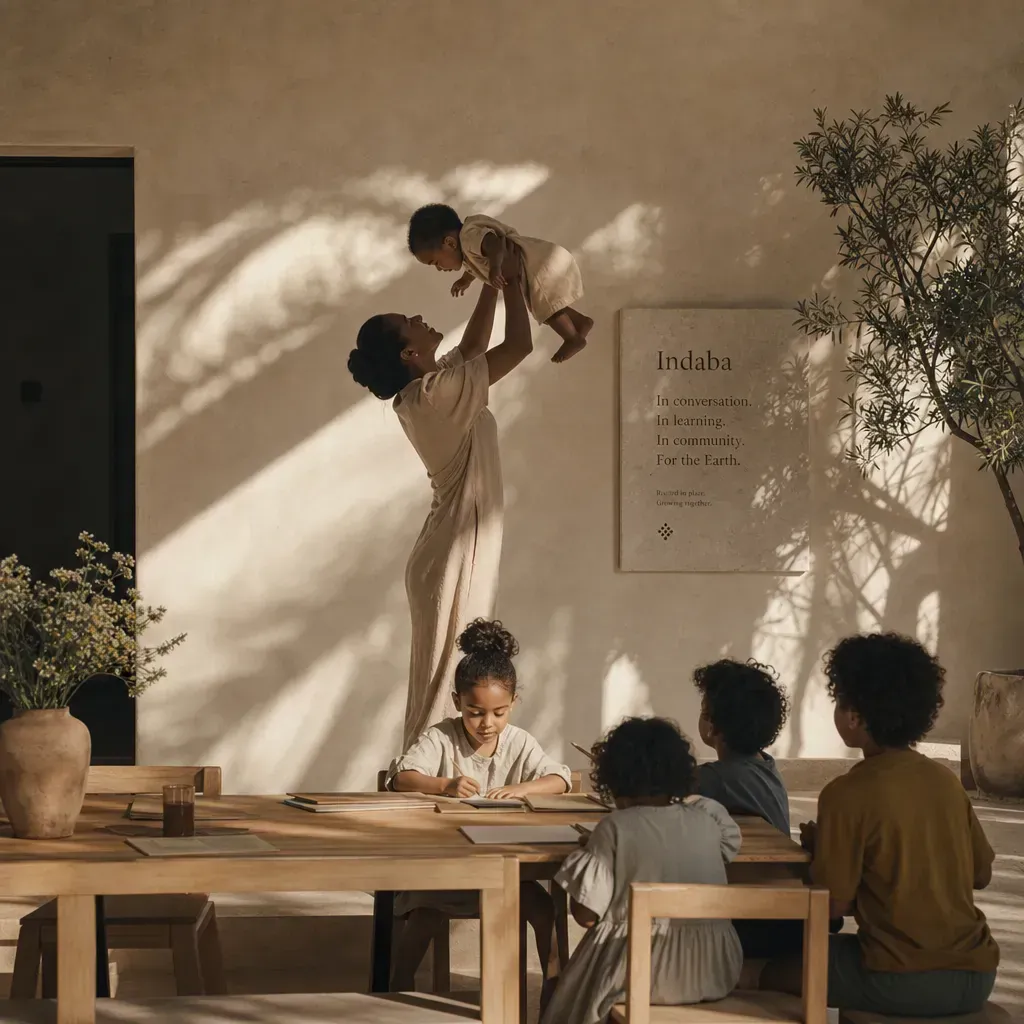
01
Child development
Movement, language and culture, social and emotional life, cognition and early mathematics, from birth to six.
 Concept
First cohorts being arranged · register interest
Indaba Care is built on CARE, the Indaba Institute’s caregiver training programme. It is a practical learning journey for nannies and caregivers who want to bring confidence, purpose and professional excellence to their work.
01Observation

Before we guide, we learn to see. Which of these did you see, and which did you assume?
01The child poured water from the jug into the glass.
Seen. You can point to it: it happened in front of you.
02The child is clumsy.
Assumed. A judgement, not an observation. A spill is part of learning to pour.
03Some water spilled onto the tray.
Seen. Described exactly as it happened, without a verdict.
04The child is bored and wants something new.
Assumed. Returning to a task can just as easily mean interest. Ask what draws the child back.
05The child wiped the tray and poured again.
Seen. An action you watched, and a good place to begin wondering why.
An exercise in the spirit of the programme’s observation strand, not part of the CARE assessment.
02The transformation
Every day, caregivers help shape a child’s confidence, language, habits and emotional wellbeing. Yet many receive little structured training, limited mentoring and few chances to grow professionally. Children deserve better. So do caregivers.
03Who you become
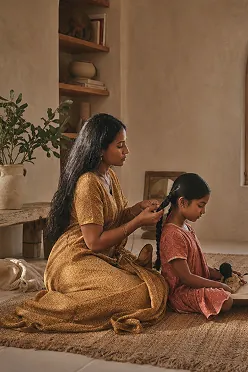
The adults who matter most to children rarely see themselves as babysitters. They become trusted guides, role models and partners in a child’s development.
 Concept
 Concept
The person a family relies on with confidence and peace of mind.
Able to understand a child’s needs, interests and development.
Knowing what to do, when to do it and why it matters.
Clear communication, sound boundaries and thoughtful routines.
Children may forget the toys. They rarely forget the adults who helped shape their world.
04V01 programme outline
The Version 01 outline describes 20 in-person training days across 23 modules. Learning happens through facilitated discussion, demonstrations, hands-on activities, observation, role play and learning from peers.
Each day begins with stillness and reflection and closes with journalling and gratitude. The manual includes developmental reference tables for movement, language, social and emotional development, and cognition.
V01 programme outline, October 2026: a programme outline, not a confirmed cohort calendar. Day 20 (Digital Storytelling) is listed; its content is still in development.
Stillness and reflection to begin the day.
Discussion and demonstration of the day’s theme.
Hands-on activities, observation and role play.
Journalling and gratitude to close.
05Curriculum domains
Six domains of professional practice, drawn from the six strands of the V01 manual: Montessori foundations, the role of the adult, child development, daily living and the home, professional practice, and nutrition and earth stewardship.
01
Movement, language and culture, social and emotional life, cognition and early mathematics, from birth to six.
02
Learning to see before responding, and reflecting on how the adult’s own preparation shapes a child’s day.

03
Activities of daily living that invite a child to take part, from preparing food to caring for plants.


04
Respectful responses to children, and clear, confidential communication with parents.
05
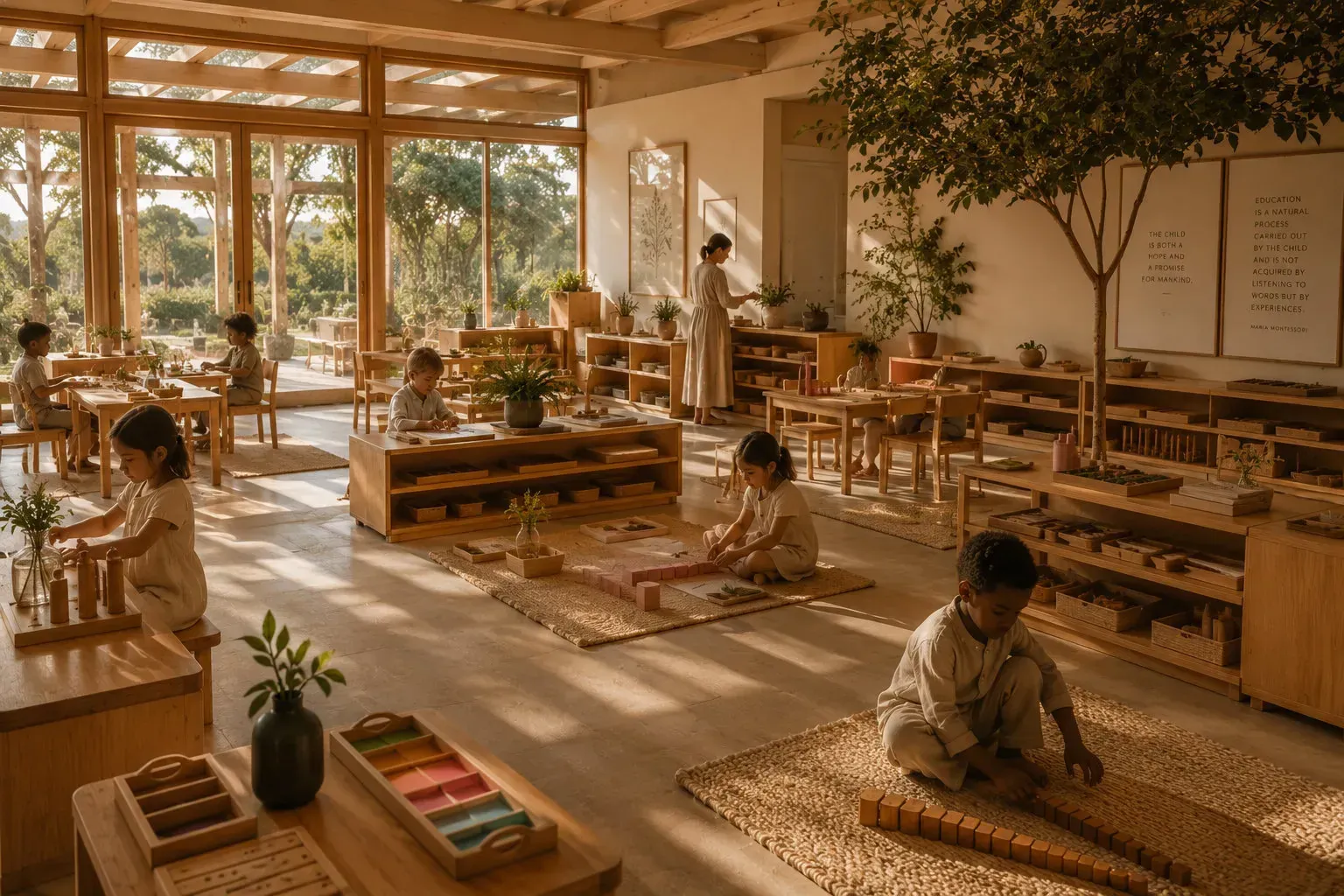
Preparing a home that invites participation, and the caregiver’s role in sleep and toileting routines.

06
Nutrition and meal preparation, professional boundaries, time management and the reflective habits of the work.
06Learning method
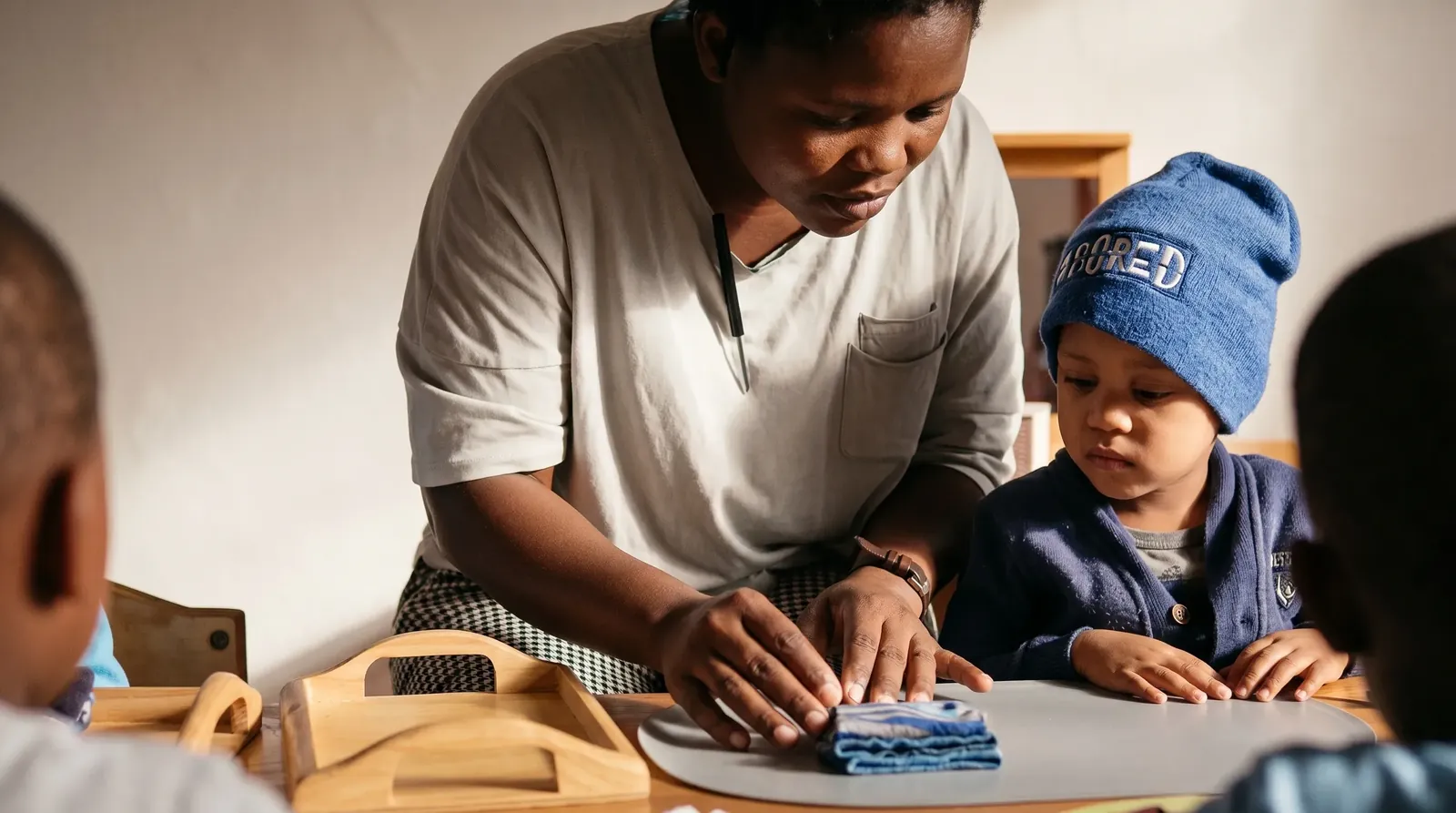
Indaba Care puts principles into practice, not just into words. Every strand returns to the same ideas about how children grow.
 Concept
Every child arrives with dignity and potential.
Children become what they experience.
“Help me do it myself.”
The environment is the silent teacher.
Before we guide, we must learn to see.
Real life is the curriculum.
The foundations of human connection.
Children need both roots and wings.
07Assessment and certification
The V01 manual describes the learning programme. It does not set out a formal assessment, and award and certification are to be confirmed by the Indaba Institute.
CARE, the programme behind Indaba Care, is a distinct, Montessori-informed caregiver programme. It is not an Association Montessori Internationale (AMI) diploma. Before you enrol, ask the Institute’s admissions team what the cohort you are considering awards, and how it is assessed.
About Association Montessori Internationale (AMI) (another Indaba site)
08Families, employers and agencies
Children benefit when parents and caregivers work from the same principles. Families who would like to support their nanny’s training can register interest and tell us in the message.
Nanny agencies, employers and care organisations can talk to us about arranging a cohort for their caregivers, with delivery adapted to their setting.
09Price and availability
The first CARE cohorts are being arranged with the Indaba Institute, and none has published dates yet. CARE will run in cohorts arranged with the Institute; register interest to hear when one is planned.
Dates, venue, fees and entry requirements will be confirmed by the Indaba Institute for each cohort. Please check them with admissions before making travel, work or financial arrangements.
10Questions
No. CARE, the programme it is built on, is a distinct Montessori-informed caregiver programme. The V01 manual does not specify an AMI award or accreditation. Ask the Institute about certification for the cohort you are considering.
Indaba Care focuses on caregivers working with young children in the home. CoRE supports community early childhood practitioners and their classrooms and centres.
The V01 outline describes 20 in-person days, usually 09:00–17:00. The calendar and attendance requirements are confirmed for each cohort, so ask before you commit.
Indaba Care is designed both for people preparing to become caregivers and for those already working. Entry requirements are to be confirmed with the Institute.
The V01 programme is designed for in-person, facilitated delivery. We will say so clearly if that changes.
11At a glance
12Register interest
Register interest and we will let you know when a cohort is being arranged that might suit you. To read the full programme or ask about a specific cohort, go to the Indaba Institute.
Interest registered
Thank you.
We have your details and will write to you when there is news about what you chose. You can ask us to remove them at any time.
Indaba Care
Read the full CARE programme at the Indaba Institute, or see how the same principles shape the classroom.